Many business owners begin a website conversation by talking about appearance. They want something modern, professional, and attractive. Those things matter. A dated or poorly designed site can weaken trust before a visitor reads a single paragraph.
But looking good is not the website’s complete job.
A business website should help a visitor answer three questions quickly: Am I in the right place? Can this business help me? What should I do next?
If the design is beautiful but those answers are unclear, the website becomes decoration rather than a business tool.
Clarity Comes Before Creativity
Visitors usually arrive with a problem, not an interest in your company’s internal language. A restaurant owner may want more customers on slow weekdays. A consultant may need a more reliable way to book qualified conversations. A medical office may want fewer intake delays.
Your homepage should connect with that reality before introducing a long list of services.
A clear opening message identifies who you help, what problem you solve, and the result the visitor can expect. It does not need to explain everything. It needs to give the visitor enough confidence to continue.
Compare these two openings:
“We provide innovative, comprehensive solutions for businesses.”
“We help service businesses connect their marketing, customer follow-up, and daily workflows.”
The first sounds polished but could describe almost anyone. The second helps the right visitor recognize a relevant problem.
Every Page Needs a Purpose
A website should not be a collection of pages created because other websites have them. Each page should support a decision.
- The homepage establishes relevance and directs the journey.
- Service pages explain specific problems, solutions, and outcomes.
- The About page builds confidence in the people and thinking behind the business.
- Case studies provide evidence of transformation.
- Articles answer questions and help the business become discoverable.
- The contact or booking page removes friction from the next step.
When the purpose of a page is unclear, the content usually becomes unfocused. When the purpose is clear, the writing, visuals, and calls to action become easier to design.
Connect the Website to What Happens Next
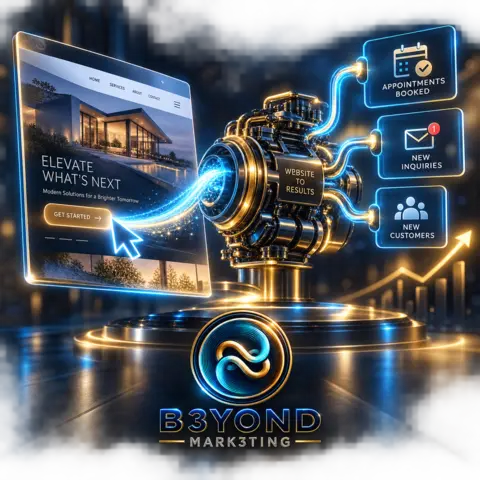
The website is not a finish line. It is a bridge.
What happens after someone completes a form? Do they receive confirmation? Is the inquiry stored somewhere useful? Does the right person receive an alert? Is there a response-time expectation? If the prospect does not schedule immediately, is there an appropriate follow-up?
A contact form that sends an email into a crowded inbox is technically functional, but it may not be operationally reliable. A stronger system can organize the inquiry, notify the team, initiate a helpful response, and make the next action visible.
That connection is where a website begins to operate as part of the business rather than as a digital brochure.
Trust Is Built Through Details
Visitors look for evidence that your business is active, credible, and capable. Useful trust signals include:
- Clear contact information
- Consistent branding
- Real photographs when appropriate
- Current service information
- Reviews or testimonials used responsibly
- Examples of completed work
- Helpful articles that demonstrate understanding
- Secure, mobile-friendly pages that load properly
Trust also depends on consistency. If your social media promises one thing, your website communicates another, and your follow-up feels unrelated to both, the experience becomes fragmented.
Review Your Website as a Customer
Open your site on a phone and pretend you know nothing about the business. Within ten seconds, can you explain what it does? Can you locate the main service? Can you find the next step without searching? Does the text speak to a recognizable need? Does the site make you feel guided or merely informed?
Then test the full process. Submit the form, click the phone number, schedule an appointment, and read the confirmation. The gaps are often found after the button is pressed.
A Better Standard for Business Websites
The question is not simply, “Do we have a website?” or even, “Does it look professional?”
The more useful question is, “What role does this website play in our customer journey?”
A strong website attracts the right people, communicates clearly, builds trust, guides action, and connects that action to a reliable internal process. When those elements work together, the website becomes an active part of how the business thinks and operates.
B3YOND perspective: If your website looks good but does not consistently support inquiries, appointments, or sales, it may need more than a visual refresh. B3YOND helps businesses connect design, message, customer action, and follow-up into one intelligent digital experience. Book a consultation to examine what your website is doing now—and what it could be doing for your business.